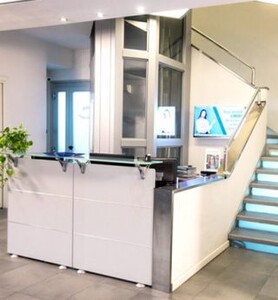
Florence Medical Center was built on a simple conviction: people deserve surgical care that feels both highly professional and genuinely personal. Rather than creating a large, impersonal hospital, the founders chose to assemble a compact private facility in which dozens of specialists share operating theatres, diagnostic equipment and a single organisational culture. The result is a centre where patients can move from first consultation to surgery and follow-up without being passed between unconnected providers, and where every member of staff understands that efficiency only matters if it serves comfort, safety and trust. Today the centre brings together roughly fifty doctors working across many disciplines, and its aesthetic and reconstructive surgery department draws directly on that collective strength. For anyone weighing up where to entrust their body and their wellbeing in Italy, this combination of scale, coordination and attentiveness is the first reason the centre stands apart.
One Building, Many Disciplines Working as a Single Team
The defining feature of Florence Medical Center is the way its specialties are woven together. Aesthetic and reconstructive surgery does not operate in isolation; it shares corridors, records and expertise with ophthalmology, dermatology, general surgery, vascular medicine, cardiology, gynaecology, orthopaedics, otolaryngology and other fields. When a patient's medical history raises a question, the answer is often a short walk away rather than a referral to a different city clinic weeks later. This proximity shortens waiting times, reduces duplicated tests and lets surgeons make decisions with a fuller picture of each person's health.
Such collaboration is especially valuable for patients with complex histories. A pre-operative cardiac assessment, a dermatological opinion on skin quality or a vascular check can be arranged within the same facility, with results shared securely among the professionals involved. The centre's philosophy is that good surgery begins long before the operating room and continues long after the patient returns home, and a multidisciplinary environment makes that continuity possible.
• Around fifty specialist doctors under one roof
• Shared medical records that keep every clinician informed
• In-house diagnostic examinations to avoid unnecessary travel
• Preventive check-up programmes and a blood-sampling point run in partnership with an accredited laboratory
• Coordinated scheduling so that consultations, tests and surgery follow a logical sequence
Theatres, Recovery Rooms and Technology Chosen With Care
Patients often ask what happens behind the doors of an operating suite, and Florence Medical Center is open about its setup. The facility covers roughly five hundred square metres and includes two fully equipped operating rooms, a short-stay recovery area and seven outpatient surgical clinics. This configuration allows the team to schedule procedures thoughtfully, avoiding the overcrowded lists that can make larger institutions feel rushed.
Anaesthetic care is tailored to the individual. Depending on the type of intervention and the patient's health, surgery may take place under conscious sedation or general anaesthesia, always supervised by specialists who monitor vital signs from the first moment to the last. The centre favours minimally invasive approaches wherever they are appropriate, because smaller incisions and gentler techniques generally mean less discomfort, shorter recovery and a faster return to daily routines. In many cases patients are able to go home in less than twenty-four hours, recovering in the familiarity of their own surroundings while remaining in close contact with the medical team.
Equipment is selected not for marketing appeal but for clinical reliability. Instrumental diagnostics, modern monitoring systems and sterile, well-organised theatres support surgeons in delivering consistent, carefully documented results.
A Patient Journey Mapped From First Call to Final Check
Choosing surgery is a significant decision, and the centre has designed its patient pathway to remove uncertainty at every stage. The journey usually begins with a telephone call, an email or a WhatsApp message to the front desk, where staff explain how consultations work and help book the most suitable specialist. During the first appointment, the surgeon listens carefully, examines the area of concern, discusses expectations honestly and explains whether surgery is the right choice at all. Patients are encouraged to ask questions, take time to reflect and return for a second meeting if they wish.
Once a decision is made, the team prepares a personalised care plan covering pre-operative tests, the surgical day, pain management, dressings and follow-up visits. Written instructions accompany verbal explanations, so nothing important is left to memory. After surgery, check-ups are scheduled at regular intervals to monitor healing and address any concerns quickly.
• Clear, unhurried consultations focused on realistic goals
• Personalised care plans tailored to each patient's health and lifestyle
• Pre-operative tests organised within the same facility whenever possible
• Short-stay recovery with discharge guided by medical criteria, not by the clock
• Structured follow-up appointments and a direct line for post-operative questions
Accessibility is part of the experience as well. The centre stands beside a railway station and is served by several city bus routes, while drivers can reach it quickly from the nearby motorway exit. For patients travelling from other regions of Italy or from abroad, this ease of access removes one more source of stress from an already important day.
Values That Shape Every Decision in the Department
Behind the facilities and the organisation lies a set of values that the centre applies consistently. Professionalism comes first: every surgeon in the aesthetic and reconstructive department holds a specialist qualification in the field, and continuing education is treated as an obligation rather than an option. Honesty follows closely. Patients receive candid information about what surgery can and cannot achieve, about recovery times and about possible risks, because informed consent is only meaningful when it rests on transparent dialogue.
Respect for individuality is equally central. No two bodies are alike, and no two patients arrive with the same story. The team takes time to understand personal motivations, cultural sensitivities and practical constraints such as work commitments or family responsibilities, then adapts the plan accordingly. Discretion is guaranteed throughout, from the waiting area to the handling of medical records.
Finally, the centre is committed to accessible excellence. By running an efficient, well-coordinated facility rather than an oversized hospital, it aims to deliver specialist-level care with sensible scheduling and clear communication about costs. The goal is that every patient leaves feeling that their trust was justified, their questions were answered and their wellbeing was placed above every other consideration.
• Specialist-qualified surgeons committed to ongoing training
• Transparent explanations of outcomes, recovery and risks
• Plans that respect personal goals, schedules and sensitivities
• Strict confidentiality in every interaction
• An efficient structure that keeps care focused and well organised
Reassurance for Visitors Arriving From Beyond the Region
A growing number of patients reach the centre from other parts of Italy and from abroad, and the organisation has adapted to their particular needs. Travelling for surgery raises practical questions that local patients rarely face: how many days to plan, where to stay, how to coordinate tests performed at home with those required on arrival, and how to stay in touch with the surgeon once the journey back is complete. The front desk helps visitors think through these details in advance, suggesting realistic timelines and grouping appointments so that time away from home is used efficiently.
Before travelling, many visitors share medical documentation and photographs remotely so the team can offer a preliminary opinion and flag any additional examinations that may be needed. On arrival, the consultation confirms suitability in person, and the surgical date is set only when everyone is confident that the plan is safe. After discharge, follow-up can continue through scheduled visits and remote check-ins, with clear guidance on warning signs and on when a further appointment is advisable.
• Help with planning the length of stay and the order of appointments
• Preliminary review of documents and images before the trip
• Diagnostic tests arranged on site to limit extra travel
• Convenient rail, bus and motorway connections
• Ongoing contact after the return home
This attention to logistics reflects the same principle that guides every clinical decision at the centre: patients should be able to focus on their recovery, not on paperwork or uncertainty. By anticipating the questions that typically arise for those who come from far away, the staff transform what could be a stressful experience into a well-structured, predictable process.
For individuals and families looking for a private surgical centre in Italy that unites multidisciplinary expertise, modern theatres and a calm, attentive atmosphere, Florence Medical Center offers a thoughtfully organised and medically rigorous environment. It is a place where advanced care is delivered with warmth, where questions are welcomed and where every stage of the journey is planned with the patient's safety and confidence in mind.